
Last Friday afternoon I had the opportunity to join 22 other working professionals to help run some mock interviews for young people aged 16-18.
The session was organised and facilitated by EY Foundation, a UK Employability charity that brings together employers and young people to deliver high-quality employability skills training, paid work experience, and mentoring.
The session lasted about an hour and a half and I got to meet and interview some fantastic, confident and contentious young people, virtually, from around the Greater Manchester area.
But that is not what I chose to write about today.
For the first 30 minutes, all us interviewers got the chance to introduce ourselves and share with the young people on the call some pieces of advice about interviews and networking we had learnt throughout our careers.
There were great pieces of advice offered on the call, and I thought I would collect a handful of what was said to share with a wider audience, because there might have been someone who wasn’t on the call that afternoon, but they could still use some help and advice in this current job market.
Advice for Interviews

Research the industry and/or the company you’re interviewing for – Are there any important headlines or pieces of news which happened recently which would be good to know before the interview which you can be equipped with if it comes up in discussion? This will show your seriousness about the role and your keenness to understand how the industry/company is progressing.
Humanise the interviewer – At the end of the day, the people interviewing you are just someone’s Mum, Dad, Brother, Cousin. They have a life too, just like you. Hopefully this will help to lower the stakes and in turn, lower your nerves going into the interview.
Take a breath/slow down – Don’t be afraid to slow down your speaking pace when answering questions. A lot of the time during interviews we are nervous, our heart is beating and we become breathless which can mean we tend to rush through our answers. Taking a moment to breathe and consciously slow down your speaking can help lower your heartrate, helping you feel more in control of yourself and the interview. You will then be better able to showcase yourself through your answers.
Pause – Take a pause before answering questions. Resist the urge to jump into answering the questions right away. The interviewers know you might need a little time to think before you answer, and it is ok to take that time to formulate what you’re going to say. Whilst you’re thinking, you may wish to tell the interviewer you’re writing down the question or that it is a good question and you’re thinking of an answer. But it is ok to pause.
STAR – The STAR method. It is a tried and true way of formulating concise examples for interview questions when time is limited, but you want to pack a punch when answering questions and giving examples. Just make sure you don’t let your answers get away from you as you need your interviewer to be able to follow what you’re saying. Always summarise your answer at the end and return to the initial question.
Personality – Don’t be afraid to let your personality shine. The company is hiring a person at the end of the day, and they want to make sure you will fit in with the rest of the workers on the team. Bringing your personality to the forefront also shows self-confidence and will make you a lot more memorable after the interviews have concluded.
Post interview questions – Remember to have a few questions ready to go at the end of the interview when you are asked ‘Do you have any questions for us?’ You may genuinely have things you want to know, so this would be the time to speak up and get your information, but it also shows curiosity, contentiousness and that you’re really invested in your future at this potential company and in this potential job.
The importance of ‘Thank you’ – After your interview, at the end of the day, always contact your interviewer(s) to express your thanks. They have given up their time to interview prospective new hires, so it is polite to thank them for that. This will also make you stand out from the crowd and show that you are a polite and well-mannered person to work with. (Also a quality that interviewers are looking out for…)
The importance of following up – Follow up about a week after the interview (unless you’re given a specific ‘next steps’ timeline during the interview) to check in on the status of any decision making. You may haven’t heard anything back yet because people are busy with their day to day jobs, but you need to follow up to know where you stand. This will show eagerness and restates your interest in the role to the employer. It is also good to understand what stage the decision process is at if you have multiple applications on the go, assisting with your tracking process.
Advice for Networking
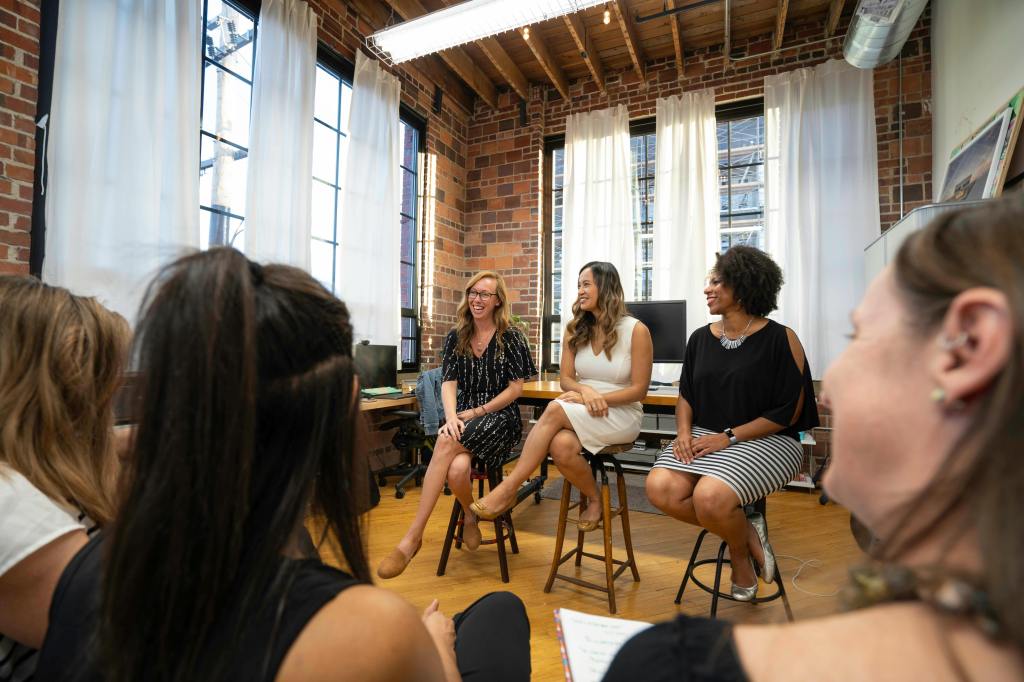
Listen – Come to the event, listen to other people and genuinely engage with them. You’re going to an event to be around other people, so see what you can find out about them. Ask questions and respond to their answers. If you really listen, you might be able to find that person who can take your career to the next level.
Not just work – You don’t just have to talk about work throughout the entire event. This might be obvious to people who are experienced networkers but when you’re just starting out the ‘rules’ for what you are ‘allowed’ to talk about might be illusive. People go to networking events to connect with others. Sometimes it might be difficult to connect with others about your career history, but everyone can connect with small talk and a few anecdotes to warm up the conversation. Vary the conversation, remember you did go there in a career capacity, but don’t forget the authentic human connection whilst you’re there.
Personality – Related to the previous point, let your personality shine. You will connect with those you are meant to when you bring your personality to the event. You’ll be a lot more memorable after the event too.
Bring a friend – If you’re really uncomfortable about going by yourself to networking events, you can bring a friend who can support you and who you can talk things over with after the event.
Skills and experiences – Have some skills and experiences ready to go for when career discussions begin. This will show that you’re prepared and confident to talk about what you currently do/study and where you want to go.
LinkedIn – It’s helpful to keep a running notes document open in your phone throughout the event, so you can quickly type peoples name down when they give it to you and then continue with the conversation fully focused. You’ll then want to connect with these people on LinkedIn after the event.
Following up – Now you need to follow up with all those people who you added to your notes document to discuss anything that came up during the event, or to follow up about any opportunities mentioned. This shows that you’re truly interested and eager and what’s the point of networking if you are not actively growing your network.
So there we have it, a collation of advice for interviews and networking from a group of 20+ professionals. As with everything, you will get better at it the more you do it so good luck out there, make mistakes and learn and grow.
Thanks again to EY Foundation for facilitating such an excellent and necessary session. These experiences are invaluable for young people.
 The Mind Library
Leave a comment